
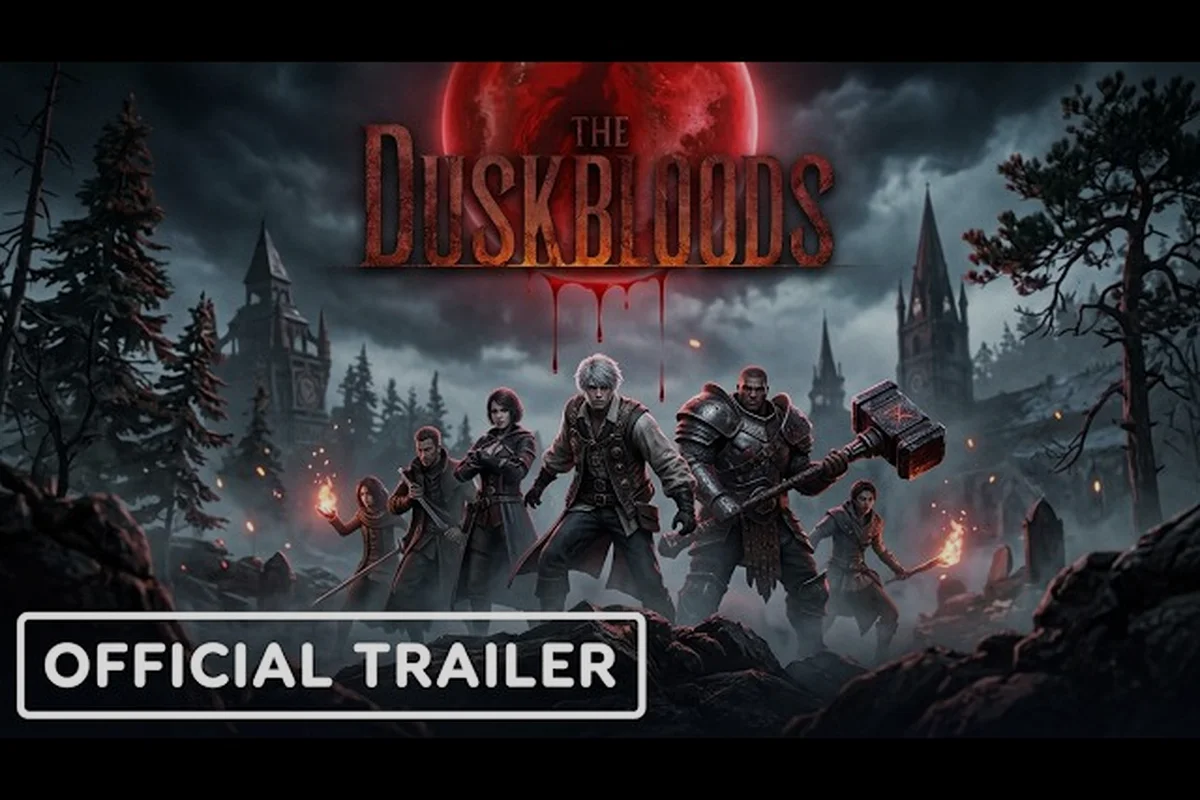
The duskbloods weapon variety is shaping up to be FromSoftware's most ambitious arsenal yet, with over 12 playable characters each wielding distinct loadouts. Understanding this weapon system explained through character-specific combinations will determine whether you dominate Dusk Battles or become another moontear statistic. Start with our The Duskbloods Weapon Types overview and then compare loadouts in the Every Weapon guide to build your main.
The Duskbloods Weapon Variety: A New Arsenal Philosophy
FromSoftware's upcoming Switch 2 exclusive breaks away from the traditional single-protagonist formula. According to the closed network test details reported by players, every Bloodsworn character carries a unique melee weapon, a dedicated ranged option, and a special ability tied to their Blood History. This trinity defines the duskbloods weapon variety, making character selection as impactful as build customization in previous titles.
The weapon system explained through the network test reveals that loadouts are not interchangeable. Unlike Elden Ring's free-form equipment system, The Duskbloods locks each character to their signature arsenal. This design choice forces players to master specific movesets rather than gravitating toward universally powerful options.
Consider the implications for multiplayer: when eight players clash in Dusk Battles, each combatant brings a distinct threat profile. A character wielding a heavy greatsword plays nothing like one dual-wielding daggers, and that asymmetry creates the tactical depth that competitive players crave.
Key features driving the weapon variety include:
-
Character-locked loadouts that emphasize mastery over customization
-
Ranged weapons for every character, a first for FromSoftware's action RPGs
-
Blood History customization that modifies how weapons perform
-
Blood Fate choices that shape your build's long-term trajectory
The shift toward character-specific arsenals means players who enjoy theorycrafting will find plenty of depth in comparing matchups, especially given the 12+ confirmed playable Bloodsworn, each with a unique melee weapon and ranged firearm. For a deeper breakdown of individual armaments, check our The Duskbloods Weapon Types guide covering every confirmed weapon category, from straight swords to heavy hitters, as revealed through the closed network test. If you prefer ranged combat, The Duskbloods Guns and Blades explains the firearm and melee pairing in detail.
How the Weapon System Explained Through Character Loadouts
The weapon system explained in the network test reveals that each Bloodsworn brings a primary melee weapon, a secondary ranged firearm, and a signature ability. This three-part structure ensures no character feels incomplete, regardless of engagement distance, because even a pure melee fighter can pepper foes at range while closing in, and a gun-focused build retains a melee fallback for close-quarters duels.
Melee Weapon Archetypes Across the Roster
The confirmed roster showcases a wide spectrum of melee philosophies, from aggressive rushdown to patient counter-attacking. Community reports from the closed test highlight several archetypes that demonstrate the duskbloods weapon variety in action, including heavy hitters who trade blows, speed demons who never let opponents breathe, and balanced fighters who adapt to any situation.
| Archetype | Example Weapon | Playstyle Strengths | Best Engagement Range |
|---|---|---|---|
| Heavy Hitter | Greatsword-class | High poise damage, punishing trades | Close-to-mid |
| Speed Demon | Twin daggers | Rapid pressure, bleed buildup | Point-blank |
| Balanced Duelist | Straight sword | Reliable damage, versatile combos | Mid-range |
| Reach Specialist | Polearm-class | Spacing control, crowd management | Mid-to-long |
| Defensive Wall | Greatshield combo | Block stability, counter openings | Close-range |
Each archetype demands different positioning and resource management. The heavy hitter excels when trading blows, using their slower but more damaging strikes to win trades, while the speed demon thrives on relentless aggression that prevents opponents from setting up their own offense, forcing them to react rather than plan.
Ranged Weapons: A New Layer of Combat Depth
Every character in The Duskbloods carries a ranged weapon, a significant departure from typical FromSoftware design. This addition ensures that even pure melee builds can harass opponents at distance or finish off fleeing enemies, and it adds a layer of tactical depth to every engagement, as players must manage both melee spacing and firearm reload timing.
| Ranged Type | Fire Rate | Damage Profile | Ideal Use Case |
|---|---|---|---|
| Pistol-class | Fast | Low per-shot | Harassment, combo extenders |
| Rifle-class | Slow | High per-shot | Punish whiffs, long-range picks |
| Shotgun-class | Medium | Burst damage | Close-range pressure |
| Crossbow-class | Variable | Medium | Utility, status application |
The integration of ranged options fundamentally changes how Dusk Battles unfold. Players must now respect sightlines and reload timing, adding a layer of mind games that pure melee combat never required, because a well-timed shot can interrupt an opponent's combo or force them to reposition, creating openings for your melee follow-up.
Signature Abilities and Cross-Weapon Synergy
Beyond basic attacks, each character's signature ability interacts with their weapons in unique ways. Some abilities buff weapon damage, while others create area denial that complements a specific playstyle. Understanding these synergies is essential for mastering the duskbloods weapon variety.
According to the GamingBolt character overview, the roster includes characters with dramatically different loadout philosophies. Some favor aggressive melee with supportive ranged options, while others lean into gunplay with melee as a backup. This design ensures that every playstyle finds a viable representative.
For players interested in how these loadouts map to specific characters, our Bloodsworn explained article breaks down each fighter's complete kit, including their weapon choices and ability synergies, drawing on community-sourced data from the closed network test and the game's official reveal materials.
Blood History Customization and Its Impact on Weapons
The weapon system explained extends beyond static loadouts through the Blood History customization system. Announced during the network test reveal, this system allows players to modify their character's capabilities, including how their weapons perform in combat, by selecting Blood Gifts that alter core statistics like damage, stamina, and attack speed.
Primary and Secondary Blood Gifts
Each character can equip one primary Blood Gift and one secondary Blood Gift, selected from a pool tied to their Blood History. These gifts modify core combat statistics, including attack power, stamina recovery, and movement speed, allowing players to tailor their weapon's feel to their preferred playstyle.
-
Attack power scaling for melee or ranged weapons
-
Stamina regeneration rates affecting combo potential
-
Special ability cooldown reduction for signature moves
-
Elemental damage infusion for status effect builds
The choice of Blood Gifts dramatically alters how a character's weapons feel in practice. A speed-focused character might sacrifice raw damage for faster stamina recovery, enabling extended pressure sequences that overwhelm opponents, while a tanky build might boost defense at the cost of mobility, making them a slow but unkillable wall.
Blood Fate: Long-Term Build Direction
Beyond immediate customization, players select a Blood Fate that shapes their build's long-term direction. This decision influences which stats gain bonus progression as you level, effectively determining whether your weapon of choice remains viable into late-game content, so a player who loves a fast dagger should invest in a Fate that boosts agility and crit damage.
| Blood Fate | Stat Bonuses | Best Weapon Synergy | Recommended Playstyle |
|---|---|---|---|
| Moonlit Hunter | Dexterity, Agility | Speed weapons, pistols | Hit-and-run tactics |
| Crimson Vanguard | Strength, Vitality | Heavy weapons, shotguns | Aggressive trading |
| Pale Scholar | Arcane, Focus | Elemental weapons, rifles | Status effect builds |
| Dusk Stalker | Endurance, Stealth | Daggers, crossbows | Ambush and evasion |
The Blood Fate system adds long-term planning to the weapon system explained. Because respec options remain limited based on network test reports, players should carefully consider which weapon archetype they enjoy before committing to a fate, as a wrong choice could leave you underpowered in the endgame.
Customization Depth Compared to Previous Titles
FromSoftware veterans will notice both continuity and departure. The weapon variety resembles Dark Souls' diverse movesets, but the character-locked nature draws inspiration from fighting games like Guilty Gear. This hybrid approach creates a unique identity that distinguishes The Duskbloods from everything the studio has released before.
The Blood History system also introduces roguelike elements, as some network test reports suggest randomized gift pools that encourage experimentation across playthroughs. This variability ensures that the duskbloods weapon variety remains fresh even after dozens of hours, because each run offers different combinations of gifts and weapons to try.
Strategic Weapon Choices for Different Playstyles
With such extensive the duskbloods weapon variety, choosing where to invest your time matters. The weapon system explained through community testing reveals distinct character tiers based on ease of learning and competitive viability, with some loadouts offering immediate power while others require significant practice to unlock their full potential.
Best Weapons for Beginners
New players should prioritize characters with forgiving mechanics and straightforward game plans. According to community reports from the network test, these loadouts offer the smoothest learning curve, allowing beginners to focus on fundamentals like spacing and timing without struggling with complex ability rotations.
-
Balanced melee characters with reliable damage output and simple combo strings
-
Ranged-focused characters that allow safe damage from distance while learning enemy patterns
-
High-survivability builds with defensive tools that forgive positioning mistakes
The straight sword archetype remains the quintessential beginner weapon in The Duskbloods because it teaches spacing fundamentals without punishing mistakes too harshly. Its balanced swing arcs and moderate recovery frames let new Bloodsworn learn to measure distance against faster daggers or heavier greatswords while still having room to dodge or parry. Unlike the more commitment-heavy weapons, the straight sword's light attacks chain smoothly into a quick step, making it ideal for reading enemy patterns in the chaotic 8-player Dusk Battles. Veterans will find its moveset familiar, but the added super jump and double jump mechanics mean you can now use a simple thrust to punish an opponent who misjudges their aerial approach. This weapon is particularly effective for players still mastering the Victory Point system, as its reliability lets you focus on objective play rather than complex combos.
Advanced Weapon Optimization Techniques
Experienced players can extract additional value from the weapon system explained by mastering advanced techniques, such as animation cancels, reload cancels, and ability combos that chain melee and ranged attacks seamlessly, as demonstrated by top players during the network test.
-
Weapon swapping mid-combo to extend pressure and confuse opponents
-
Ranged weapon canceling to bait reactions and punish whiffs
-
Blood Gift timing to maximize burst windows during Dusk Battle objectives
-
Positional advantage using ranged weapons to control objective areas
These techniques require practice, but the payoff is substantial. Players who master weapon-specific tech gain a significant edge in competitive matches, because they can output more damage, avoid more hits, and control the pace of combat in ways that less experienced opponents cannot match.
Matchup Considerations in Dusk Battles
Understanding the duskbloods weapon variety includes recognizing favorable and unfavorable matchups. Eight-player Dusk Battles create chaotic scenarios where positioning and target selection often matter more than raw mechanical skill, so a player with a fast weapon might struggle against a heavy hitter in a 1v1 but excel at picking off weakened foes in the chaos.
| Your Weapon Type | Strong Against | Weak Against |
|---|---|---|
| Heavy Hitter | Defensive players, low-mobility builds | Kite-heavy ranged characters |
| Speed Demon | Slow weapons, casters | AoE specialists, shotgun users |
| Ranged Focus | Melee rushers | Aggressive divers, stealth characters |
| Balanced | Generalists | Specialists in either direction |
The meta-game of character selection adds a strategic layer before combat even begins. Coordinated teams can build compositions that cover each other's weaknesses, while solo players must choose adaptable characters that can handle multiple threats, making character choice a critical decision in every match.
For a complete list of every confirmed armament, refer to our weapons revealed roundup covering all announced equipment so far, including the unique melee and ranged weapons for each of the 12+ playable Bloodsworn, as revealed through official trailers and the closed network test.
Comparing Weapon Systems Across FromSoftware Titles
The duskbloods weapon variety represents a significant evolution from previous FromSoftware games, where players could equip any weapon on any character. Here, each Bloodsworn is locked to their unique loadout, which changes how players approach combat and build their characters, as noted in the network test coverage.
| Game | Weapon System | Customization Depth | Ranged Options |
|---|---|---|---|
| Dark Souls | Class-based, any weapon | High, full equipment freedom | Limited bows/crossbows |
| Bloodborne | Trick weapons | Medium, weapon transformations | Parry guns only |
| Elden Ring | Ash of War system | Very high, full freedom | Full ranged builds |
| The Duskbloods | Character-locked | High, Blood History system | Every character has ranged |
The weapon system explained through this comparison shows that The Duskbloods trades equipment freedom for character identity. This trade-off creates more memorable combat encounters, as each fighter's limitations define their strengths, forcing players to master a specific kit rather than switch weapons to counter opponents.
What Carries Over From Previous Games
Veteran players will recognize familiar mechanics under new presentations: the stamina management and poise system echo Dark Souls, while the Bloodsworn's sprint and double jump recall Sekiro's mobility. The straight sword's guard-break follow-up, for instance, functions like a classic kick, but here it can be chained into a lunging thrust that consumes a small amount of your special blood meter. Similarly, the backstab animation has been reworked to trigger only when an opponent is staggered by a successful parry, not from any rear attack, which rewards precise timing over positioning. The firearm off-hand, though new, behaves like a crossbow from Bloodborne, with limited ammo that regenerates slowly, so veterans will instinctively know to conserve shots for critical moments. Even the Destined Rivals system, which marks a specific player as your personal target, feels like an evolution of the invasion mechanic, but now it directly feeds into your Blood Fate customization after the match.
-
Stamina management remains central to combat flow
-
Weapon movesets share DNA with established archetypes
-
Status effects like bleed and poison retain their tactical value
-
I-frame dodging continues to reward precise timing
These familiar foundations mean that FromSoftware veterans can adapt quickly, while the new systems provide fresh depth for experienced players to explore. The superhuman movement alone changes how you approach every engagement, as a well-timed double jump can now bypass a shield wall or reposition for a backstab that was previously impossible. The Blood Fate system, which lets you tweak your loadout based on how you perform in matches, adds a meta-game layer that rewards experimentation with different weapon pairings. For instance, a player who favors the straight sword might unlock a passive that extends its reach after landing three consecutive hits, while a dagger user could gain a dodge that leaves a damaging afterimage. These modifiers are not just stat boosts; they alter your tactical options in ways that keep even veteran players on their toes. The dynamic events that can swing Victory Points also force you to adapt your weapon choice mid-match, so a loadout that dominates in duels might falter when a boss spawns and you need to switch to a more damaging stance.
What's Genuinely New
The innovations in the weapon system explained deserve emphasis, including the universal ranged weapon, the three-part loadout structure, and the Blood History customization, all of which are new to FromSoftware's action RPG formula and were highlighted in the network test reveal.
-
Universal ranged combat for every character
-
Character-locked loadouts that emphasize mastery
-
Blood History roguelike elements for replayability
-
PvPvE objective play that changes weapon usage patterns
These additions suggest that The Duskbloods aims to carve its own identity rather than simply iterate on established formulas, as the game introduces a PvPvE structure with up to 8 players and a Victory Points system that rewards diverse strategies beyond just killing.
Duskbloods Weapon Strategies for Competitive Play
Mastering the duskbloods weapon variety requires more than understanding individual weapons. Successful players develop comprehensive strategies that account for the full combat ecosystem, including the map layout, dynamic events, boss spawns, and the abilities of other players, as seen in the network test.
Building Your Competitive Loadout
When preparing for ranked Dusk Battles, consider these factors: first, your weapon's reach and recovery speed relative to the map layout, as tight corridors in the train level favor short thrusts while open rooftops reward sweeping arcs. Second, how your Blood Fate bonuses synergize with your chosen firearm, since a pistol that staggers can set up a heavy attack from your melee weapon, but only if your passive reduces reload time. Third, your ability to contest dynamic events, as a slow greatsword may struggle to interrupt an enemy channeling a moontear ritual, whereas a rapier's rapid pokes can break their focus. Fourth, your matchup against the Destined Rivals system, because if you know a specific player is hunting you, a weapon with a strong parry window becomes more valuable than raw damage. Finally, consider your stamina economy under pressure, as the super jump costs a chunk of your meter, so a weapon with low stamina consumption lets you reposition more often without leaving yourself vulnerable.
-
Character matchup spread against the current meta
-
Blood Gift combinations that complement your playstyle
-
Blood Fate progression toward late-game power spikes
-
Team composition in coordinated play
The optimal loadout balances personal comfort with competitive viability. While tier lists provide guidance, the weapon system explained rewards genuine mastery over theoretical superiority, so a player who has spent 50 hours with a lower-tier character may outperform a novice using a top-tier one.
Practice Drills for Weapon Mastery Across the Arsenal
Improving with your chosen weapons requires structured practice: start in the training grounds to internalize the exact frames of your light and heavy attacks, then move to solo runs against the AI-controlled Bloodsworn to learn spacing without the chaos of 8-player matches. Next, record your Dusk Battle replays and note every time you missed a punish because you were out of range or committed to a slow attack. Focus on one specific technique per session, such as chaining a sprint into a jump attack or using your firearm to bait a dodge before following up with a melee strike. Once you have the basics, experiment with different Blood Fate loadouts to see which passive bonuses complement your playstyle, like a faster stamina regen for aggressive straight sword users or a wider parry window for counter-heavy builds. Finally, join the closed network test sessions in August 2026 to test your skills against real opponents, as the unpredictable human movement will reveal weaknesses that no AI can simulate.
-
Spacing drills against training dummies to internalize range
-
Combo practice to build muscle memory for optimal damage
-
Matchup experience through varied opponent exposure
-
Objective play to understand weapon utility beyond dueling
According to community testing, most players need 15-20 hours with a character before achieving competitive competence. Patience during this learning period pays dividends in ranked play, as you'll internalize the weapon's range, speed, and recovery times, allowing you to react instinctively in combat.
Adapting to Future Balance Changes
As with any live game, expect balance adjustments after launch. The weapon system explained today may shift as the developer responds to community feedback, so stay informed through official channels and community discussions to remain competitive and adapt your loadout choices accordingly.
The TechRadar network test coverage confirms that the developer actively iterates on gameplay systems based on test feedback. This responsiveness suggests a healthy post-launch balance ecosystem, where underpowered weapons may be buffed and overpowered ones nerfed, keeping the meta fresh and competitive.
Frequently Asked Questions
What is the best weapon for beginners in The Duskbloods?
The balanced duelist archetype with a straight sword and pistol offers the most forgiving introduction to the weapon system explained. This setup teaches spacing fundamentals while providing reliable damage output. The ranged option also allows safe poke damage while learning enemy patterns, making it ideal for new players.
How does the weapon system explained differ from previous FromSoftware games?
Unlike Elden Ring's complete equipment freedom, The Duskbloods locks each character to a signature weapon set. However, the Blood History customization system lets players modify weapon performance through gifts and fates. This hybrid approach creates character identity while maintaining build depth.
Can you respec your character's weapon stats?
Yes, but only through the Pale Ember ritual at the Hollow Forge. This resets all weapon-specific attributes—like Duskblood’s Scythe finesse or the Gravepiercer’s strength scaling—to base, letting you redistribute points freely. However, the cost doubles each reset, and unique weapon perks are permanently lost.
How many weapons are in The Duskbloods?
The dawnblood weapon variety includes over 12 playable characters, each with a unique melee weapon and ranged option. This means at least 24 distinct weapons are confirmed so far, with additional armaments likely revealed before launch. The Fextralife community wiki tracks newly discovered equipment.
Which weapon type is strongest in competitive play?
The Duskbloods meta favors flexible loadouts, not raw damage—balanced weapons adapt to chaotic eight-player skirmishes. Dusk Stalker’s ambush kit shines, but mastery trumps tier lists. Test your preferred archetype and Blood Fate combo in the network test; share what clicks.