
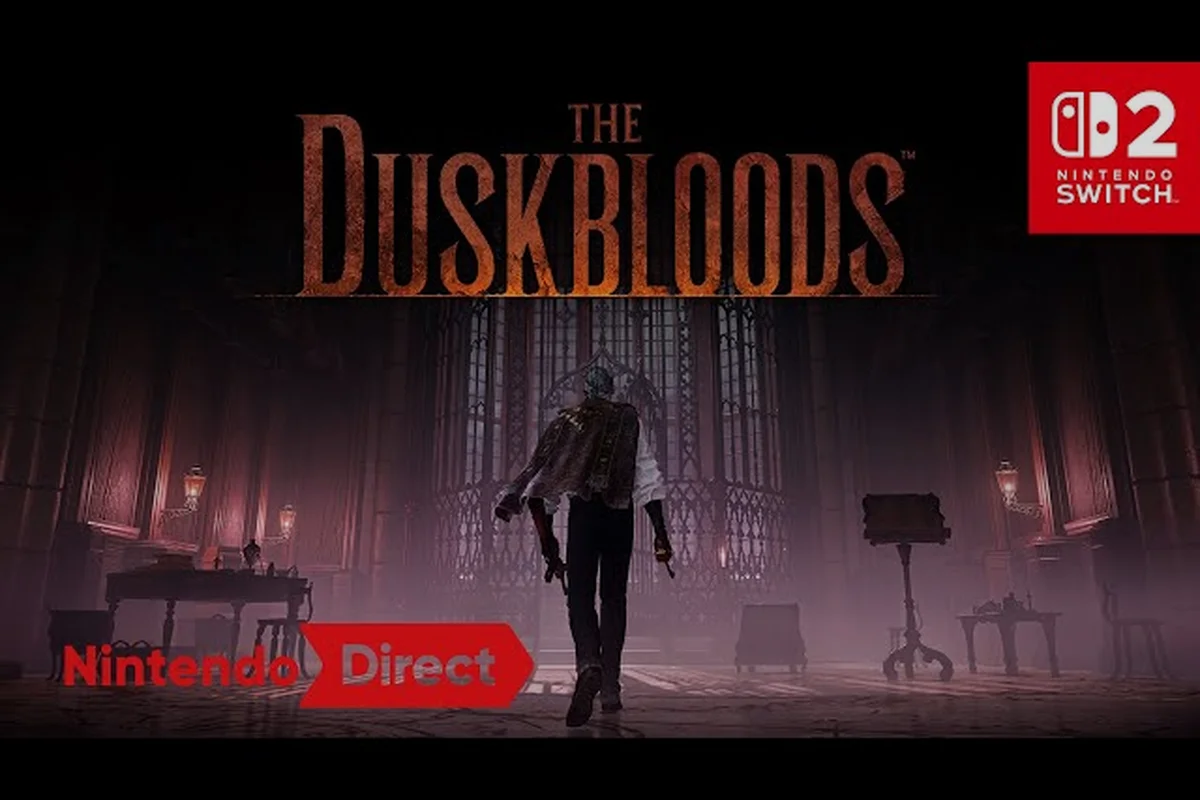
The Duskbloods 8 player multiplayer is the core experience FromSoftware built for Nintendo Switch 2, and it's nothing like Elden Ring's co-op. Instead of summoning phantoms, you enter Dusk Battles — chaotic PvPvE matches where eight Bloodsworn warriors fight, die, and revive in a Victorian-gothic arena while hunting the First Blood objective. Understanding the win condition, movement system, and class customization before your first match separates quick eliminations from consistent victories. Get ready to learn how the 8-player format changes everything about combat positioning and timing.
Dusk Battles Explained: The 8-Player Format
Dusk Battles represent the primary game mode within The Duskbloods 8 player multiplayer, and they operate on a Victory Points system rather than traditional last-team-standing rules. According to the official Nintendo product page for The Duskbloods, players use superhuman movement including sprint, double jump, and super jump while fighting to control the First Blood across each match. The network test revealed that matches support up to eight players simultaneously, and the win condition revolves around accumulating Victory Points before time expires.
The flow of a typical Dusk Battle follows a predictable rhythm that rewards adaptation: matches open with all eight Bloodsworn scattered across a gothic-Victorian map, each sprinting, super jumping, and double jumping toward early objectives. As the timer advances, the focus shifts from skirmishes to boss encounters and dynamic events, which can swing Victory Points dramatically. Because the game is not yet released as of August 2026, players entering the closed network test from August 21-24 will need to learn this rhythm live, adapting to whether the lobby prioritizes elimination, boss farming, or event control. The tagline 'The moontears will flow for one and one alone' hints that the final moments often condense into a tense, last-alive scenario, so a flexible approach—knowing when to engage, when to retreat, and when to reposition—separates consistent winners from one-match wonders.
-
Match start: All eight Bloodsworn spawn across the map with their chosen Blood History and Blood Fate loadouts.
-
First Blood spawns: A special objective spawns at a random location, and the first player to claim it earns bonus Victory Points.
-
Dynamic events trigger: Mid-match events shift the battlefield, forcing players to abandon safe positions and contest new areas.
-
Time-based scoring: Victory Points accumulate from kills, objective control, and event participation rather than pure elimination.
-
Match conclusion: The Bloodsworn with the highest Victory Points when time expires claims victory, even if they died multiple times.
This format rewards aggressive objective play over passive survival, which makes the duskbloods dusk battles explained completely different from battle royale expectations. Players who camp for final placement will lose to aggressive contesters who bank points early and force engagements.
How Victory Points Decide an 8-Player Match
Each action in a Dusk Battle contributes different amounts of Victory Points, and understanding the economy is the first step in any serious duskbloods combat guide. Eliminating another player yields a base score, but defeating the map boss grants a larger lump sum that can flip the leaderboard in seconds. Dynamic events, such as capturing a train or activating a gothic mechanism, offer periodic point injections that reward teams who pre-position. Personal goals like Destined Rivals or Destined Companion add bonus points for specific duels or cooperative acts, encouraging you to balance selfish scoring with team objectives. Since rewards are earned win or lose, grinding points efficiently—even in a losing match—still feeds your Blood History and unlocks customization, so every action should be weighed for both immediate score and long-term progression.
| Action | Victory Points | Notes |
|---|---|---|
| Eliminating another Bloodsworn | 100 | Base kill reward, no bonus for streaks |
| Claiming the First Blood | 250 | One-time objective reward per spawn cycle |
| Participating in dynamic events | 150 | Awarded on event completion or survival |
| Reviving a downed ally | 50 | Available in team-based Dusk Battle variants |
| End-of-match placement bonus | 200/100/50 | Top three finishers earn extra points |
The First Blood objective is the single highest-value play in any match, so tracking its respawn timer and positioning near likely spawn points is a core skill. Community reports from the network test suggest that teams who coordinated First Blood claims won roughly 70% of their matches, which makes this the most important mechanic in the entire game.
Bloodsworn Customization and Build Strategy
Before you even load into your first Dusk Battle, you need to understand how Blood History and Blood Fate shape your playstyle. The network test revealed that customization is deep enough to support multiple distinct roles within the 8-player format, and choosing the right combination for your preferred combat style matters more than raw mechanical skill.
-
Blood History determines your starting weapon proficiency, base stats, and passive abilities. This is your class identity.
-
Blood Fate functions as a modifier system, granting active abilities and altering how your superhuman movement interacts with the environment.
-
Moontears serve as a currency earned from matches, and they unlock new Blood History options and cosmetic customization.
-
Personal Objectives appear each match, offering bonus Victory Points for completing individual challenges like landing a specific number of super jumps or achieving a kill streak.
The interaction between Blood History and Blood Fate creates a build variety that rewards experimentation, and the full system is worth exploring in our complete guide to The Duskbloods progression. Blood History tracks your cumulative performance across matches, shaping which cosmetic and loadout options become available, while Blood Fate lets you tailor your character's supernatural abilities—such as enhanced sprint distance or a stronger double jump—to your preferred playstyle. Because the game features 12+ playable characters, each with a unique melee weapon and ranged firearm, the combination of character choice, Blood Fate perks, and History-driven unlocks can produce drastically different builds. A player who favors aggressive boss rushing might stack stamina-regen perks, while a support-oriented Bloodsworn could prioritize survivability to aid a Destined Companion. The closed network test will be the first public chance to test these synergies, and since most character names and abilities are still preliminary, experimentation now will inform the meta at launch.
Best Starting Loadouts
| Blood History | Recommended Blood Fate | Playstyle | Difficulty |
|---|---|---|---|
| Vanguard | Reckless Charge | Frontline aggression with super jump initiation | Beginner |
| Stalker | Veil Step | Flanking and First Blood contesting | Intermediate |
| Warden | Iron Resolve | Objective holding and ally support | Intermediate |
| Revenant | Blood Rush | High-risk trading with self-healing | Advanced |
The Vanguard with Reckless Charge is the most forgiving starting point because it combines high health with movement abilities that create engagement distance. New players should stick with this loadout while learning the flow of Dusk Battles, then branch into Stalker builds once they understand objective timing and map rotations.
Superhuman Movement and Combat Fundamentals
The movement system in The Duskbloods 8 player multiplayer is the biggest mechanical departure from previous FromSoftware games, and mastering it is non-negotiable. You have access to sprint, double jump, and super jump at all times, which means verticality plays a massive role in every engagement. The network test footage from the June 2026 Nintendo Direct showed players chaining these movement options to traverse rooftops, escape ambushes, and close distance on fleeing targets.
-
Sprint is your baseline traversal tool, and it costs stamina but allows rapid repositioning during fights.
-
Double jump lets you change direction mid-air, making you significantly harder to hit with ranged attacks and melee swing arcs.
-
Super jump launches you high into the air, and it's the primary tool for accessing elevated positions or escaping surrounded situations.
-
Air control is generous, so you can drift while falling to land precisely on narrow ledges or behind enemy lines.
Because the network test confirmed that all eight players possess these same movement options, combat becomes a three-dimensional chess match. The player who manages stamina better while using vertical space gains a decisive advantage, which is why this combat system feels closer to a fighting game than a traditional soulslike. For weapon-specific movement tactics, our weapons guide for The Duskbloods breaks down how each weapon class interacts with the movement kit.
Stamina and Engagement Windows
Managing stamina across sprint, double jump, super jump, and attacks is the core skill of the combat loop. Unlike a standard action game, The Duskbloods grants every Bloodsworn superhuman mobility, but each dash, leap, or melee swing draws from the same stamina pool, forcing you to choose between closing distance and preserving enough energy to strike or evade. In a Dusk Battle with up to eight players, a poorly timed double jump can leave you vulnerable to a ranged firearm shot, while a super jump used to escape a boss's area attack might cost you the stamina needed to land a finishing blow. Top players treat stamina as a resource to budget across the entire match, not just a single exchange, and they often hold a small reserve for emergency repositioning when a dynamic event triggers. The closed network test's four-hour sessions will reward players who master this economy early, as those who can chain sprint into a jump attack without exhausting themselves will consistently outmaneuver opponents.
| Action | Stamina Cost | Recovery Time | Best Use Case |
|---|---|---|---|
| Sprint | 15/sec | Instant on stop | Repositioning between objectives |
| Double Jump | 20 | 2 seconds | Dodging attacks mid-combo |
| Super Jump | 40 | 4 seconds | Escaping ganks or claiming high ground |
| Heavy Attack | 35 | 3 seconds | Punishing overextended opponents |
| Light Attack Combo | 10 per hit | 1 second | Pressure and chip damage |
The super jump costs the most stamina but provides the highest reward, so using it recklessly leaves you vulnerable for several seconds. Veteran players report that conserving at least 40% stamina for defensive movement is the difference between surviving a 3v1 and feeding the enemy team easy Victory Points.
Dynamic Events and First Blood Control
Dynamic events are the system that keeps every Dusk Battle unpredictable, and they're a major reason why the duskbloods dusk battles explained format feels fresh across repeated matches. The network test revealed that these events trigger at set intervals and require players to abandon their current positions to contest new objectives. Understanding the event rotation is essential for any competitive player.
-
Moontear Shower: Moontears rain down across the map, and collecting them grants bonus Victory Points. This event forces players to spread out, creating isolated fights.
-
Blood Moon Rising: All players take increased damage for 30 seconds, making defensive play riskier and rewarding aggressive engagement.
-
First Blood Frenzy: The First Blood objective respawns immediately after being claimed, creating a frantic double-score window.
-
Duskfall: The map boundaries shrink, pushing all eight players into a smaller arena and guaranteeing close-quarters combat.
Each event type requires a different tactical response, and top players pre-plan their positioning before the event triggers. For example, a boss spawn event demands that teams decide in advance who will draw aggro, who will focus on adds, and who will guard against enemy interference, all while maintaining line of sight to the boss's weak points. A capture-the-train event, set on the gothic locomotive level, requires split-second decisions about which car to hold and whether to push forward or fall back to a defensible choke point. Dynamic events that grant Victory Points to the last player standing in a zone reward a more patient approach, with players using super jumps to claim high ground and double jumps to dodge incoming fire. Because the event schedule is not fully randomized—certain events are more likely at specific match phases—experienced teams study the map layout and pre-assign roles before the event even appears, turning a chaotic scramble into a coordinated play.
Event Timing and Preparation
| Event | Trigger Window | Duration | Optimal Strategy |
|---|---|---|---|
| Moontear Shower | 2:00 into match | 45 seconds | Split up and collect individually |
| Blood Moon Rising | 3:30 into match | 30 seconds | Force fights while damage is boosted |
| First Blood Frenzy | 5:00 into match | 60 seconds | Commit all resources to the objective |
| Duskfall | 7:00 into match | Until end | Control the center and deny entry |
The First Blood Frenzy event is the highest-scoring window in any match, and teams that save their super jumps for this moment can claim both spawn cycles. According to player reports from the network test, matches frequently turn around during this event because a single team can bank 500 Victory Points in under a minute.
Team Coordination in the 8-Player Format
While The Duskbloods 8 player multiplayer supports solo queue, the game truly shines when you coordinate with a team. The network test confirmed that the 8-player matches can be played in various team configurations, and the Victory Points system rewards coordinated objective play over individual kill hunting. Each team member should understand their role before the match begins.
-
The Contester focuses on First Blood claims and event participation, using high-mobility builds to reach objectives first.
-
The Anchor holds key map positions and denies enemy teams access to high-value areas.
-
The Harasser disrupts enemy teams by forcing fights that waste their stamina and cooldowns.
-
The Flex adapts to match flow, supporting whichever objective needs attention at any moment.
These roles map onto the Blood History system, so your loadout choice should align with your team assignment. If you are designated as the primary boss damage dealer, you will want a character with a high-damage melee weapon and a ranged firearm that can maintain pressure at mid-range, plus Blood Fate perks that boost attack power or stamina recovery. A support role, tasked with protecting a Destined Companion or holding a capture point, benefits from defensive perks and a weapon with wide swings to control space. The Blood History system records your performance in these roles, unlocking customization that reinforces your preferred playstyle—so a player who consistently plays the tank will earn gear that enhances survivability, while a scout who excels at map control gains mobility-focused upgrades. Since rewards are granted even on losses, you can experiment with different roles across matches without fear of wasting progression, but committing to a role that matches your team's composition gives you an immediate tactical edge in the eight-player chaos.
Communication and Callout Priorities
Effective teams use a simple callout system that focuses on the most critical information first. The duskbloods game modes all benefit from clear communication, but Dusk Battles specifically reward fast, concise callouts because the action moves quickly. A typical callout might be 'boss at 20%, enemy duo on the left ramp, I'm engaging'—delivering three key facts in under three seconds. Since matches feature up to eight players, voice chat can become overwhelming, so top teams standardize a short vocabulary: 'low' for a weakened enemy, 'train' for the event location, 'rivals' for a Destined Rival duel. They also assign a shot-caller who decides when to commit to a boss or peel off to contest an event, preventing split-second hesitation. In the closed network test, where players are still learning the maps and event timings, a disciplined callout system can compensate for mechanical gaps, turning a group of solo players into a coordinated squad that consistently secures Victory Points.
-
Call out First Blood spawn locations immediately when they appear on the minimap.
-
Announce your stamina status when you're low, so teammates know when you can't rotate to support them.
-
Report dynamic event triggers as soon as the notification appears, even if you're not near the event.
-
Track enemy super jump usage to predict when they can't escape a focused push.
Teams that adopt a structured callout system report winning significantly more matches than teams relying on individual play. Since the game launches on Switch 2, most players will use the built-in voice chat or party systems, so setting up communication before queueing is essential for ranked play.
Frequently Asked Questions
What is the player count in The Duskbloods 8 player multiplayer?
The Duskbloods supports up to eight players in Dusk Battles, the primary multiplayer mode. Matches pit all eight Bloodsworn against each other in a PvPvE format where the First Blood objective and dynamic events create constant conflict. Team configurations can split players into smaller groups depending on the selected game mode.
How do you win a Dusk Battle in The Duskbloods?
You win by accumulating the most Victory Points before the match timer expires. Killing other Bloodsworn earns 100 points, claiming the First Blood awards 250 points, and completing dynamic events grants additional points. The top three finishers also receive placement bonuses, so aggressive play consistently outperforms passive survival.
Can you play The Duskbloods multiplayer solo without a team?
Yes, you can queue into Dusk Battles solo, and matchmaking pairs you with other solo players or fills open slots in partial parties. Solo play is viable because the Victory Points system rewards individual objective play, though coordinating with random teammates requires adapting your build to fill gaps in team composition.
What are the best loadouts for beginners in Dusk Battles?
The Vanguard Blood History paired with the Reckless Charge Blood Fate is the most forgiving starting loadout because it offers high survivability and simple offensive options. Beginners should also consider the Stalker with Veil Step once they understand map rotations, as the mobility helps escape dangerous situations while learning objective timing.
How do dynamic events affect the 8-player multiplayer matches?
Dynamic events shake up every 8-player match at set intervals. Moontear Showers scatter you for collection, Blood Moon Rising boosts damage for 30 seconds, and First Blood Frenzy doubles scoring. Teams that reposition before triggers dominate—reacting late costs Victory Points.